Treating and isolation are key, says WHO’s Africa boss
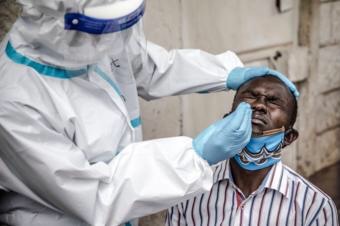
As many as 190,000 people across Africa could die in the first year of the coronavirus pandemic if crucial containment measures fail, the World Health Organization (WHO) warns.
The new research also predicts a prolonged outbreak over a few years.
“It likely will smoulder in transmission hot spots,” says WHO Africa head Matshidiso Moeti.
This patchier and slower pattern of transmission sets Africa apart from other regions, WHO experts say.
Other factors taken into account are the region’s younger populations who have “benefitted from the control of communicable diseases such as HIV and tuberculosis”, as well as lower mortality rates.
The WHO’s warning comes as Africa’s most populous nation, Nigeria, plus others including South Africa and Ivory Coast, have begun relaxing some of their lockdown measures.
What does the study say?
The study finds that between 29 million and 44 million people in the WHO African region could get infected in the first year of the pandemic. Between 83,000 and 190,000 could die in the same period, it warns.
The estimates are based on prediction modelling, and focus on 47 countries in the WHO African region with a combined population of one billion – Egypt, Libya, Tunisia, Morocco, Eritrea, Sudan, Somalia and Djibouti are not included.
Cases have been recorded in every African nation except Lesotho.
South Africa has the highest number of confirmed cases – more than 8,200 and 160 deaths – while Algeria has the most deaths – 483.
“Covd-19 could become a fixture in our lives for the next several years unless a proactive approach is taken by many governments in the region,” Dr Moeti says in a WHO statement.
More casualties as Y107.9FM has laid off almost all employees of the station.
After Caroline Sampson who announced the termination of her appointment, Friday, other top presenters of the Accra-based radio station have confirmed they have been fired.
They include MsNaa, Joel Orleans and DJ Snoop.null
“I want to thank Yfm and everyone out there, especially the listeners for all the love and support you’ve all shown me all these years. I am very grateful. With immediate effect though, my contract with Yfm has come to an end… Moving onto the next face of my career,” DJ Snoop tweeted on Saturday.
“After 11 yrs of knocking out the competition, my time with my family at Yfm has come to an end. Sad though I might be, I enjoyed every minute of it and am by no means done. Look for your girl cos imma be out there kickin ass and taking names,” MsNaa’s tweet, Friday, read.null
Joel Orleans’s was relatively short but came with teary and heartbreak emojis. He said: “I just got fired from YFM.”
RazzNews.com is reliably informed that multiple award-winning Disc Jockey DJ Vyrusky has parted ways with EIB network’s Accra-based Starr FM.
According the source,the celebrated DJ tendered his resignation on Thursday,May 7,2020.Known in real life as Kofi Amoako,DJ Vyrusky thus becomes the 3rd heavyweight employee of the EIB network to resign.
Kofi Okyere Darko aka K.O.D and Jon Germain also with Starr FM departed the company on Saturday, May 2,2020 after working there for five years.
According to K.O.D he was almost on the verge of leaving last year. He explained that there was pressure from his wife for him to leave when the company found themselves in some financial difficulty and workers were not being paid.
It would be recalled that, the Chief Executive Officer of EIB Network, Bola Ray shared some of the challenges that his outfit is going through.
Bola Ray, known in private life as Nathan Kwabena Anokye Adisi, recounted how he struggled to pay his employees. Bola ,who was speaking at the 2019 edition of iYes accentuated how he was not able to pay his workers for seven (7) solid months.
Though DJ Vyrusky’s motive behind his resignation is not readily known,the source told RazzNews.com that, he resigned due to the financial inefficiency which has catapulted the EIB Network.
The Actress has show a good post on her page , which has caught everyone’s jaw to fall.
The young Star known from her flashy lifestyle has decided to surrender her life onto Christ.
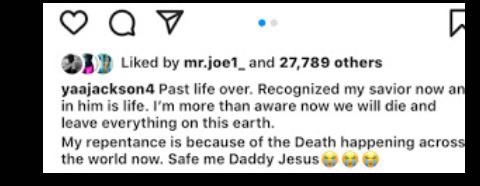
Yaa’s new white long dress and captioned under the post spoke clearly for life itself. It say’s ” past life over . I have recognize my saviour now, and in him is life . I am more than aware now , that we will die and leave everything on this earth. My repentance on this earth is because of the death happening accross the world. Save me daddy Jesus”.
The young celebrity has finally taken a stand to be on the path of righteousness.
She wrotes
Past life over, recognized my savior now and in Him is life. I’m more than aware now we will die and leave everything on this earth.
My repentance is because of the death happening across the world. Save me daddy😭😭
Gospel musician Joyce Blessing has been reported for fighting Custody for her children in a video by Okay FM.
In an interview by Okay FM , says from what we have gather so far Joyce Blessing have been reported by Zionefelix just to mention a few that she is fighting for her kids to be taken away from her husband”. She said in an interview by Okay FM that ” She does things in the right path” and that does not mean it should be said on air.
She said the reason why she doesn’t want to disclose everything for now is because she has handed everything to her lawyer .
The gospel musician said ” the right thing will be than at the right time “. but she choose to remain silence for now because her lawyer is taking over.
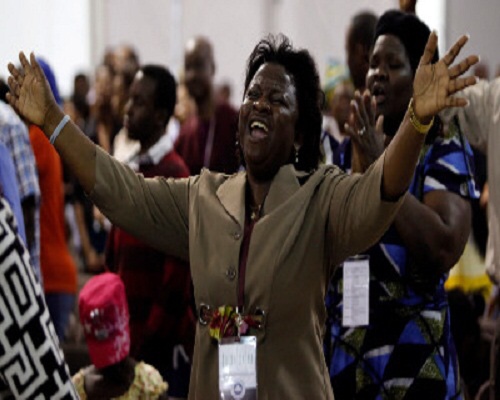
MyNewsGh has intercepted a document detailing the roadmap for churches towards lifting a ban imposed by President Nana Addo Dankwa Akufo-Addo through the Executive Instrument (EI)
The President on March 15, 2020, in a televised broadcast by Executive Instrument declared the ban on all public gatherings including conferences, workshops, funerals, festivals, political rallies, church activities, and other related events as part of measures to stop the spread of coronavirus in the country.
“All public gatherings, including conferences, workshops, funerals, festivals, political rallies, sporting events and religious activities, such as services in churches and mosques, have been suspended for the next four (4) weeks. Private burials are permitted, but with limited numbers, not exceeding twenty-five (25) in attendance”, he disclosed.
But the Christian Council of Ghana in a proposition to the government has outlined measures that will be adopted in order to curtail the spread of the virus if the ban is lifted.
Find the full unedited text of the proposal below;
REPARATION TOWARDS REOPENING OF CHURCHES IN GHANA: GUIDELINES TO MITIGATE POTENTIAL SPREAD OF COVID-19
Submitted by:
Heads of the Christian Ecumenical Bodies in Ghananull
Contact Persons:
Rev. Dr Cyril Fayose, CCG Rev. Emmanuel Barrigah, GPCC
Bishop Titi Offei, NACCC Rev. Fr. Lazarus Anondee, GCBC
May 07, 2020
i. BACKGROUND
As the COVID-19 pandemic exacts a global toll on lives and livelihoods, Ghana’s case count keeps increasing steadily since the first index case was reported on March 12, 2020, and government’s response towards slowing and stopping the transmission, government-issued several preventive protocols (social distancing, hand and respiratory hygiene practices), partial lockdown in epicentres, and imposed several restrictions on public gatherings including temporary suspension of communal Church activities. Impliedly, the suspension of religious gathering constitutes a form of lockdown, owing to the Church’s inability to congregate for communal worship. And following the President’s meeting with heads of churches and ecumenical councils on April ??, 2020 at the Jubilee House where His Excellency the President charged the Christian leaders to develop modalities and guidelines to mitigate the spread of the virus should the ban on public gathering be lifted, the Christian leaders developed these intervention strategies.
In assessing the Church’s readiness and capacity to comply with COVID-19 pandemic safety protocols, it is important to note that addressing CV-19 “requires a whole-of-government and whole-of-society response.” The Church being a major stakeholder is indispensable in the State’s overall COVID-19 containment and mitigation strategies. Given that 71% of Ghanaians identify as Christians, the Church, with its wide social network, access to communities, captive audience, unquestioned authority, and influential actors of public support for government measures is best placed to help in numerous ways with educating, counselling and sustaining the populace.
GUIDELINES TO MITIGATE POTENTIAL SPREAD OF COVID-19
As the Church prepares to come back for communal worship, the tables below show the potential risk areas and what to do to mitigate potential spread.
RISK AREAS
SPECIFIC AREAS
Entrance points to churches
Doors
Door handles
Rails
Pillars
Utility areas in the church
WC handles
Washroom door handles
Seating arrangements in the church
Close seating arrangement in the church that breaches social distancing regulations
Group sitting e.g. the choir
Nature of church building
Poorly ventilated churches – having few and small windows
Entirely glass windows that impede free flow of air
Nature of service
Handshakes during welcome sessions
Singing groups congregating at one side and singing
Group meetings – Sunday schools where teachers speak to small groups. Those in the front roll are at risk
Communion services where cups are handed to individuals
Communion service where many people drink from one cup
Communion services where packaged loaves are handed to individuals
Devices and items Microphones used commonly by more than one person, faucets, telephones
Money handled by more than one person through giving offering and tithes
Vestries & Pastors’ offices’ Door and seat handles Rails Poorly ventilated rooms Common surfaces including Pastors’ tables
S/N
SPECIFIC RISK AREAS INTERVENTIONS TO PUT IN PLACE
Church Entrances and Lobbies
Hand washing: Make available hand-washing materials for all to wash hands before entering the church or touching rails, door handles and pillars. A running tap or Veronica bucket should be put at all entrances for every church member to wash hands before entering the church. Handsfree soap dispenser must be fitted to avoid cross-contamination.
Ghana and three other African countries have been blacklisted by the European Union for money laundering.
Botswana, Mauritius and Zimbabwe are the three other African countries blacklisted.
The EU in a statement said under the Anti-Money Laundering Directive (AMLD), the Commission has revised its list, taking into account developments at the international level since 2018 and that the “new list is now better aligned with the lists published by the FATF (Financial Action Task Force).”null
Other nations blacklisted are The Bahamas, Barbados, Jamaica, along with Cambodia, Mongolia, Myanmar, Nicaragua, and Panama.
Meanwhile, Bosnia-Herzegovina, Ethiopia, Guyana, Lao People’s Democratic Republic, Sri Lanka and Tunisia have been delisted.
Speaking on the development, Executive Vice-President Valdis Dombrovskis said: “We need to put an end to dirty money infiltrating our financial system. Today we are further bolstering our defences to fight money laundering and terrorist financing, with a comprehensive and far-reaching action plan. There should be no weak links in our rules and their implementation. We are committed to delivering on all these actions – swiftly and consistently – over the next 12 months. We are also strengthening the EU’s global role in terms of shaping international standards on fighting money laundering and terrorism financing.”
The Electricity Company of Ghana (ECG) has announced that parts of Accra will experience power outages for some days, starting today, May 8, 2020.
In a statement, ECG said the power outages, locally known as dumsor, will last till Thursday, May 14, 2020.
Some parts of Accra will, therefore, experience power cuts between 10pm and 1am for the next six days.
The company said it will use the period to convey some transformers from the Tema Port to its Pokuase Bulk Supply Point (BSP) construction site.
Meanwhile, the areas to be affected include Ofankor, Tema, Klagon, Spintex, Trasacco, Dzorwulu and Achimota.
“The Electricity Company of Ghana (ECG) Limited wishes to inform the general public, especially our cherished customers in the under-listed areas that, to ensure safe conveyance of 145MVA transformers from the Tema Ports to the Pokuase Bulk Supply Point (BSP) construction site, the company will have to isolate some High Voltage overhead lines,” ECG said.
“In this regard, there will be planned outages from Friday 8th May 2020 to Thursday, 14th May 2020 between 10:00 pm and 1:00 am each day.”
The power distribution company added that it deeply regrets any inconveniences that will be caused.
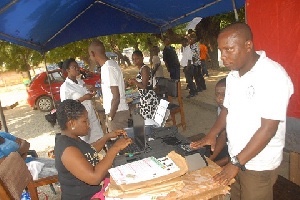
There was a raging debate over whether or not Ghana needs a new voters’ register in the upcoming December elections until the Electoral Commission (EC) put things to rest by confirming April 18, 2020, as the date for the compilation of a new voters’ register to begin.
The EC’s plans has been derailed with COVID-19 arriving at the shores of Ghana. And this has started another debate on whether the register needs to be compiled amidst the outbreak of the virus.
The Executive Director of the Danquah Institute, Richard Ahiagbah, has insisted that the new voters register needs to be compiled regardless.
According to him, election 2020 cannot come off per the constitution of Ghana if the new voters’ register is not compiled.
He made this statement in an interview on Happy98.9FM’s ‘Epa Hoa Daben’ show with Doctar Cann. In his own words he noted, “we need to compile a new voters’ register. The law gives no room for us to have an election without compiling the register. We need to compile a new register or engage in a limited voter registration exercise”.
When concerns were raised on the COVID-19 pandemic, Richard Ahiagbah opined that it is possible for the voters registration exercise to go on whilst the Government still fought the virus. He noted that his statement was not made out of political ambitions. “Whether there is COVID-19 or not, whether we will vote or not, we need to open up the voters’ register for people without their names to get registered. And that is the law”.
On his authority if it becomes impossible for citizens to get their names in the voters’ register then there would be no need for election 2020, because these individuals will be deprived of their right to vote.
He reiterated that, he could not dictate to the EC what they should do but the law requires them to compile the voters’ register. “Election 2020 can never come off without a limited voters’ register or new one. The EC can even be sued for preventing citizens from exercising the rights”.
People have been forced from their homes as rivers burst their banks
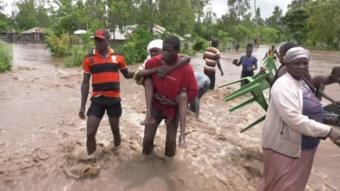
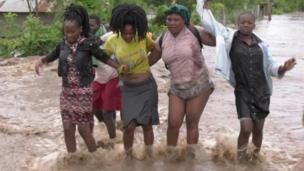
Flooding as a result of recent heavy rains has killed more than 260 people across East Africa.
Kenya has been the hardest hit with the government recording 194 deaths.
In Rwanda, 55 people have died and floods have killed 16 in Somalia. In Uganda high water levels have trapped an estimated 200 patients inside a hospital.
East African countries have also been hit by a locust invasion and Covid-19.
The authorities in Kenya have told people in some of the affected areas to move away from “potential danger”.
The water has also washed away 8,000 acres of crops and some vital infrastructure, the government has said.
Meteorologists predict that the heavier than usual rains will continue throughout May, reports the BBC’s Patience Atuhaire in Uganda’s capital, Kampala. The rainy season normally lasts until June.
The heavy rain is expected to continue for weeks
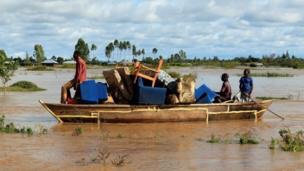
Some residents in western Kenya have had to find a safe place for their belongings
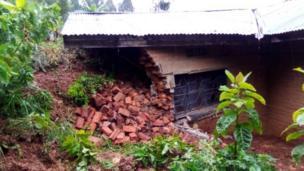
In Rwanda, people died as a result of landslides in the mountainous north-west of the country.
Houses, roads and crops were all destroyed and hundreds remain homeless, mayors of the affected districts have told the BBC’s Great Lakes service.
This house in Rwanda was destroyed by a landslide
What’s the latest from Uganda?
In western Uganda, a river burst its banks causing people to flee for safety to the town of Kasese.
At the nearby Kilembe hospital, rescuers are trying to reach the trapped patients and take them to a church.
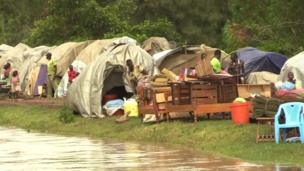
Image captionSome communities near Lake Victoria have been forced into temporary shelters
In recent weeks, water levels in Lake Victoria have reach an unprecedented height, forcing shoreline communities to abandon their homes and causing erosion along the River Nile, which is fed by the lake.
Last month, a huge floating island of loose vegetation led to a nationwide blackout in Uganda after clogging a turbine in a hydroelectric power station.
At the end of last year, rain-triggered disasters, including flash floods and landslides, killed at least 250 people and affected some three million people across East Africa.






 preznewsgh